
Explore the Hudson River School through the lens of Science, Technology, Engineering, Art, and Math. Students will examine the connection between the Hudson River School landscape paintings and environmentalism. The 19th century landscapes reveal how communities and the waterfront changed because of the Industrial Revolution. Using primary resources, students will analyze how artists like Thomas Cole expressed concerns about industrialization and promoted the preservation of nature.
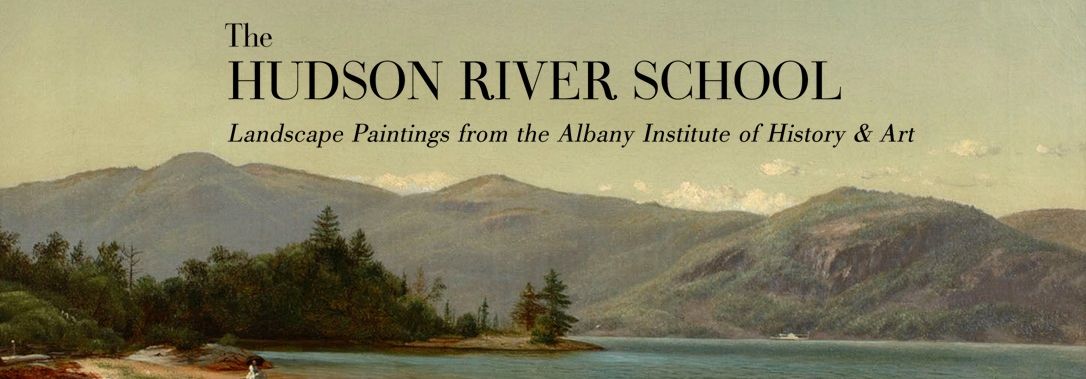
Hudson River School: Art & the Environment
Lesson 1- Landscapes of the Past
In this lesson students will be introduced to the Hudson River School art movement and some of the artists who painted in this style. Students will discuss and interpret prints, maps, and paintings to develop an understanding of what the Hudson Valley looked like in the late 1700s and early 1800s. A field trip to the Albany Institute or classroom visit by museum educators will explore 4 Hudson River School paintings and how the artists expressed their ideas about nature with accompanying art activity. Finally, students will engage in a writing activity to synthesize their learning.
Landscapes of the Past Lesson Plan (pdf)
Landscapes of the Past Student Images (pdf)
Landscapes of the Past Student Worksheets (pdf)
Landscapes of the Past Presentation (Powerpoint)
Lesson 2- Changing Landscapes
In this lesson the educator will introduce students to the Industrial Revolution and lead a discussion about the ways which Hudson River School artists responded to the effects of Industrialization on the landscape. Students will compare and contrast two historic images to analyze how artists convey meaning in their work. Finally, students will examine the ways their region or community has changed over time and complete a sketching activity to document these changes.
Changing Landscapes Lesson Plan (pdf)
Changing Landscapes Student Images (pdf)
Changing Landscapes Student Worksheets (pdf)
Changing Landscapes Presentation (Powerpoint)
Lesson 3- Landscapes of the Future
In this lesson the educator will lead a discussion about the concept of sustainability. Students will develop an understanding of sustainable development and be able to identify sustainable and non-sustainable practices. Students will work together to build a representational model of a sustainable landscape. This lesson provides students with the chance to explore challenges facing their communities and explore solutions in a scale model. Students will present their final designs to the class.
Landscapes of the Future Lesson Plan (pdf)
Landscapes of the Future Student Worksheets (pdf)
Sustainable Communities Presentation (Powerpoint)